
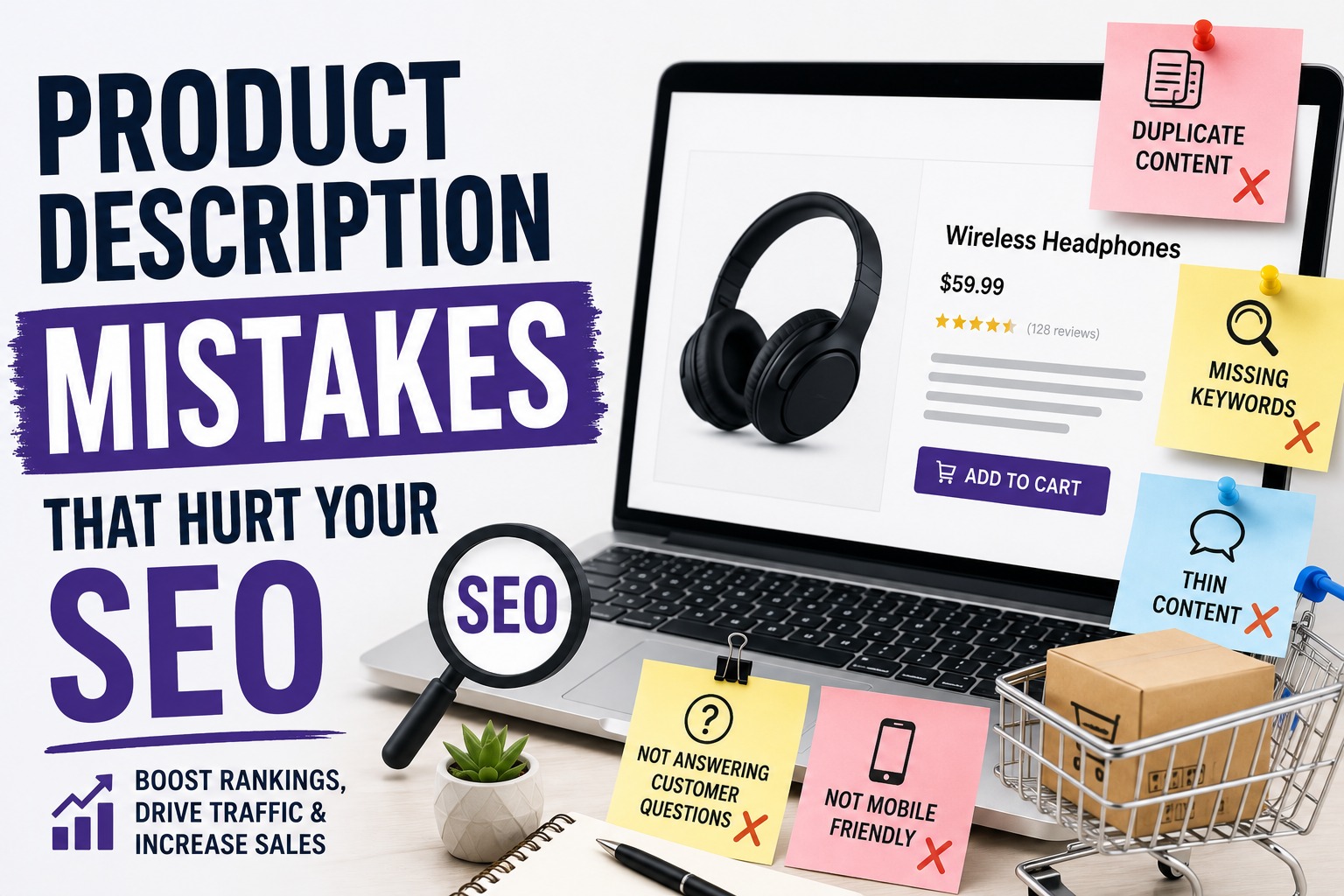
Product descriptions do much more than explain what you’re selling. They help search engines understand your products, improve your rankings, and convince visitors to become customers. Unfortunately, many online stores make simple mistakes that prevent their product pages from appearing on Google.
If your products aren’t getting enough organic traffic, your product descriptions might be the reason. Below are 15 common product description mistakes that hurt SEO and practical ways to fix them for better rankings and higher conversions.

Using Manufacturer Descriptions
Many eCommerce stores copy product descriptions directly from manufacturers. While it’s quick, duplicate content gives Google little reason to rank your page over others selling the same item. Create unique descriptions that highlight your brand’s voice, product benefits, and customer value.
Need unique product descriptions that rank? Contact AayKay Services today for SEO optimized content.
Ignoring Target Keywords
A beautiful description without relevant keywords won’t help customers find your products. Research keywords your audience actually searches for and naturally include them in your title, description, headings, and meta description.
Start optimizing every product with targeted SEO keywords today.
Keyword Stuffing
Adding the same keyword repeatedly doesn’t improve rankings. Instead, it makes content difficult to read and may trigger Google’s spam signals. Write naturally while using keyword variations and related phrases.
Focus on writing for people first and search engines second.
Writing Short, Thin Content
Descriptions with only one or two sentences rarely answer customer questions or provide enough context for search engines. Aim for detailed descriptions that explain features, benefits, specifications, and use cases.
Expand your product pages to provide real value for shoppers.
Focusing Only on Features
Customers don’t buy features; they buy solutions. Instead of listing specifications, explain how the product improves the customer’s life or solves a problem.
Turn product features into compelling customer benefits.
Missing Headings and Structure
Large blocks of text are difficult to scan. Use headings, short paragraphs, and bullet points to improve readability and SEO.
Organize every product page for both users and search engines.
Forgetting Image Alt Text
Product images help SEO when optimized correctly. Describe each image using relevant keywords in the alt text without stuffing unnecessary phrases.
Optimize every product image to increase your search visibility.
Not Answering Customer Questions
Customers often have concerns before purchasing. Address common questions about size, material, compatibility, warranty, or maintenance within your description.
Build trust by answering buyer questions before they ask.
Poor Internal Linking
Many stores miss opportunities to connect related products and categories. Internal links help Google crawl your website while encouraging visitors to explore more products.
Link related products to improve SEO and increase sales.
Ignoring Mobile Readability
Most shoppers browse on smartphones. Keep paragraphs short, use whitespace, and make important information easy to scan.
Review your product pages on mobile devices regularly.
Missing Calls to Action
Even informative descriptions should encourage visitors to take action. Guide customers toward purchasing with clear, persuasive language.
Add strong purchase focused CTAs to every product page.
Neglecting Meta Descriptions
An optimized meta description improves click through rates from Google search results.
Write compelling summaries using your primary keyword and a reason to click.
Optimize your metadata to attract more organic clicks.
Forgetting User Intent
Some visitors are comparing products while others are ready to buy.
Write descriptions that satisfy both informational and transactional search intent.
Match your content with what your customers are searching for.
Not Updating Old Product Pages
SEO isn’t a one time task. Refresh descriptions regularly by adding updated information, FAQs, and new keywords.
Schedule regular content updates to maintain your rankings.
Skipping Product Schema
Structured data helps search engines understand pricing, reviews, availability, and ratings. Adding schema markup can improve your appearance in search results with rich snippets.
Implement product schema to maximize your SEO potential.
Final Thoughts
Well-written product descriptions can significantly improve your search rankings, organic traffic, and conversions. By avoiding these 15 product description mistakes, you’ll create pages that satisfy both Google and your customers. Focus on originality, keyword optimization, readability, user intent, and valuable information to build product pages that consistently perform well in search results.
Ready to boost your eCommerce SEO? AayKay Services creates SEO friendly product descriptions that help businesses rank higher, attract qualified traffic, and convert more visitors into customers. Contact us today and give every product page the optimization it deserves.

Comments
4 responses to “Top 5 mistakes in product descriptions that hurt your SEO”
Great article! I didn’t realize duplicate manufacturer descriptions could hurt rankings this much. Thanks for explaining it so clearly.
Great insights! The advice about answering customer questions directly in product descriptions makes a lot of sense.
Product schema is something I’ve been meaning to learn more about. Thanks for highlighting its importance.
Mobile readability is so important today. Glad to see it included in this list.