
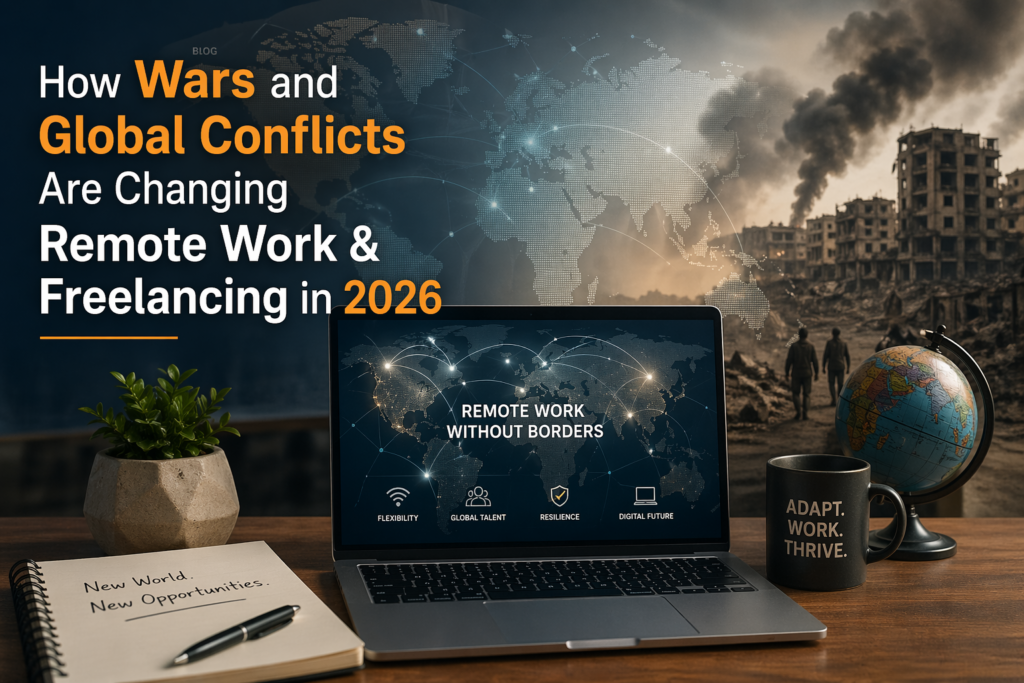
Global conflicts have always reshaped economies, but in 2026, they’re also reshaping how we work. As uncertainty grows across different regions, businesses and individuals are turning to remote work and freelancing not just for convenience, but for stability. What once felt like a pandemic-driven trend is now becoming a long-term survival strategy.
When conflicts disrupt local economies, companies are forced to rethink operations quickly. Offices become harder to maintain, travel becomes restricted, and hiring locally may not be viable. This is where remote work steps in.
Businesses are increasingly building distributed teams across borders to reduce risk. Instead of relying on one location, they diversify talent globally. For professionals, this means more opportunities than ever before to work with international clients without leaving home.
In times of uncertainty, people look for control, and freelancing offers exactly that. With traditional jobs becoming less secure in conflict-affected regions, many professionals are shifting toward freelance platforms. Freelancing enables individuals to earn in stable currencies, work with global clients, and reduce their dependence on local economies. Whether it’s writing, design, programming, or marketing, digital skills are becoming the most valuable asset in unstable times.
Interestingly, many companies aren’t loudly announcing it, but they are returning to remote hiring. The reason is simple: flexibility equals resilience.
Hiring remote workers allows businesses to:
This quiet shift is creating a massive demand for freelancers and remote professionals worldwide.
In 2026, your location matters less than your skills. People with strong digital abilities, like content creation, AI tools, coding, and digital marketing, are finding it easier to adapt and thrive.
Conflicts may disrupt industries like manufacturing or tourism, but online work continues to grow. This is why investing in digital skills is no longer optional; it’s essential.
When physical workplaces become risky or unstable, the internet becomes the safest and most reliable workplace. Remote work removes geographical limitations and provides continuity even during global disruptions.
For many, a laptop and internet connection are now more powerful than any traditional office setup.
While remote work and freelancing offer freedom, they also come with challenges:,
Being aware of these helps you prepare better and build a sustainable career.
Global conflicts are unpredictable but your career doesn’t have to be. Remote work and freelancing are no longer just trends; they are becoming the foundation of the modern workforce.
If you adapt early, learn in-demand skills, and position yourself globally, you can turn uncertainty into opportunity.
This blog effectively highlights how global instability is reshaping the freelance economy more rapidly than most people realize. Great insights!
Wars and conflicts are affecting everything from internet access to international payments, an important topic to discuss.
The future of freelancing will belong to people who can adapt quickly to global economic shifts.
This blog explores how global conflicts in 2026 are accelerating the rise of remote work and freelancing worldwide. It highlights why businesses and professionals are turning to digital careers for stability, flexibility, and long term survival in uncertain times.